
Our First Field Study!
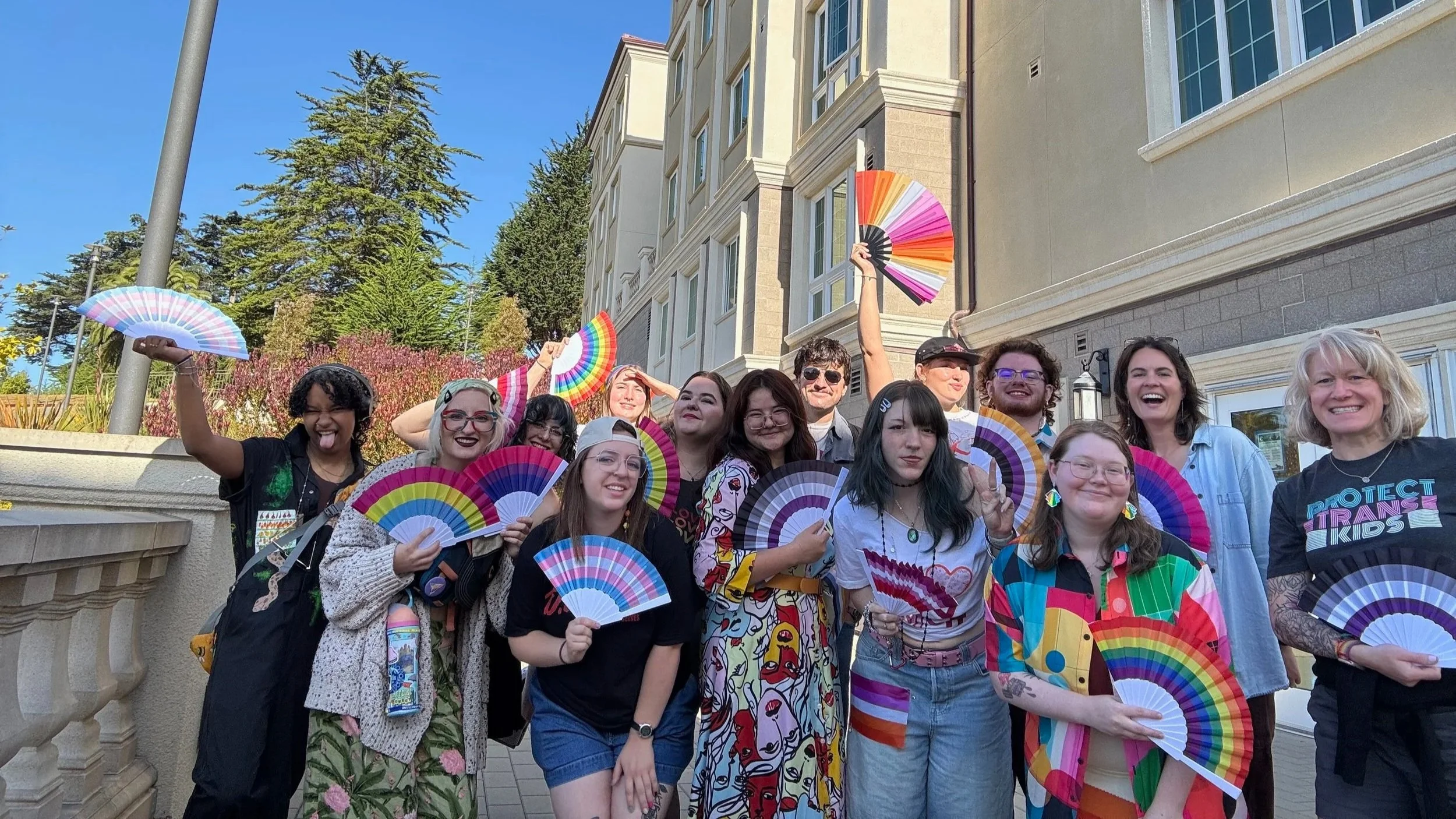
Earlier this month, we ran our very first program! Twelve students from the University of Northern Colorado spent a week with us in San Francisco and Los Angeles, learning LGBTQ+ history in the places it happened.
They did hands-on research in a working archive, stood together at the National AIDS Memorial Grove, and had lunch in a bar where the fight for LGBTQ+ rights took root. They were in San Francisco for Pride, and walked the queer landmarks of both cities. We had been working toward a program like this for a long time, and this was our first real chance to see whether it would work.
Why we built this
We’re told the world isn’t safe for us. That traveling while queer is risky. That coming out will narrow our horizons, and that being open about who we are will close certain doors. Rainbow Routes exists to prove the opposite: that being exactly who you are can open doors instead of closing them, and build connections instead of limiting them.
Belonging can be hard to come by, no matter your identities, at home and away, and it matters most for young people still figuring out who they are. Study away is one of the most powerful ways students learn about the world and themselves, with a long and well-documented record of stronger outcomes for participants, but LGBTQ students have never had programs built for them. Travel gets treated as off-limits or unsafe for us, and that keeps students wary at best, and frequently excluded altogether.
We also rarely have the opportunity to learn our own histories. Teaching queer history matters because it shows what the current erasure hides: LGBTQ people are not new, we are not going away, and we have been central to communities around the world across time. That story doesn't get told often enough, so we wanted to build our curriculum around it. The same is true of meeting queer elders. We rarely get to see people aging happily and openly as themselves, when so much of the culture still paints aging while queer as isolated and/or closeted. We wanted our students to meet people who prove otherwise.
The California Queer History Field Study was our first chance to bring all of that into one week and see how it worked.
A week of place-based learning

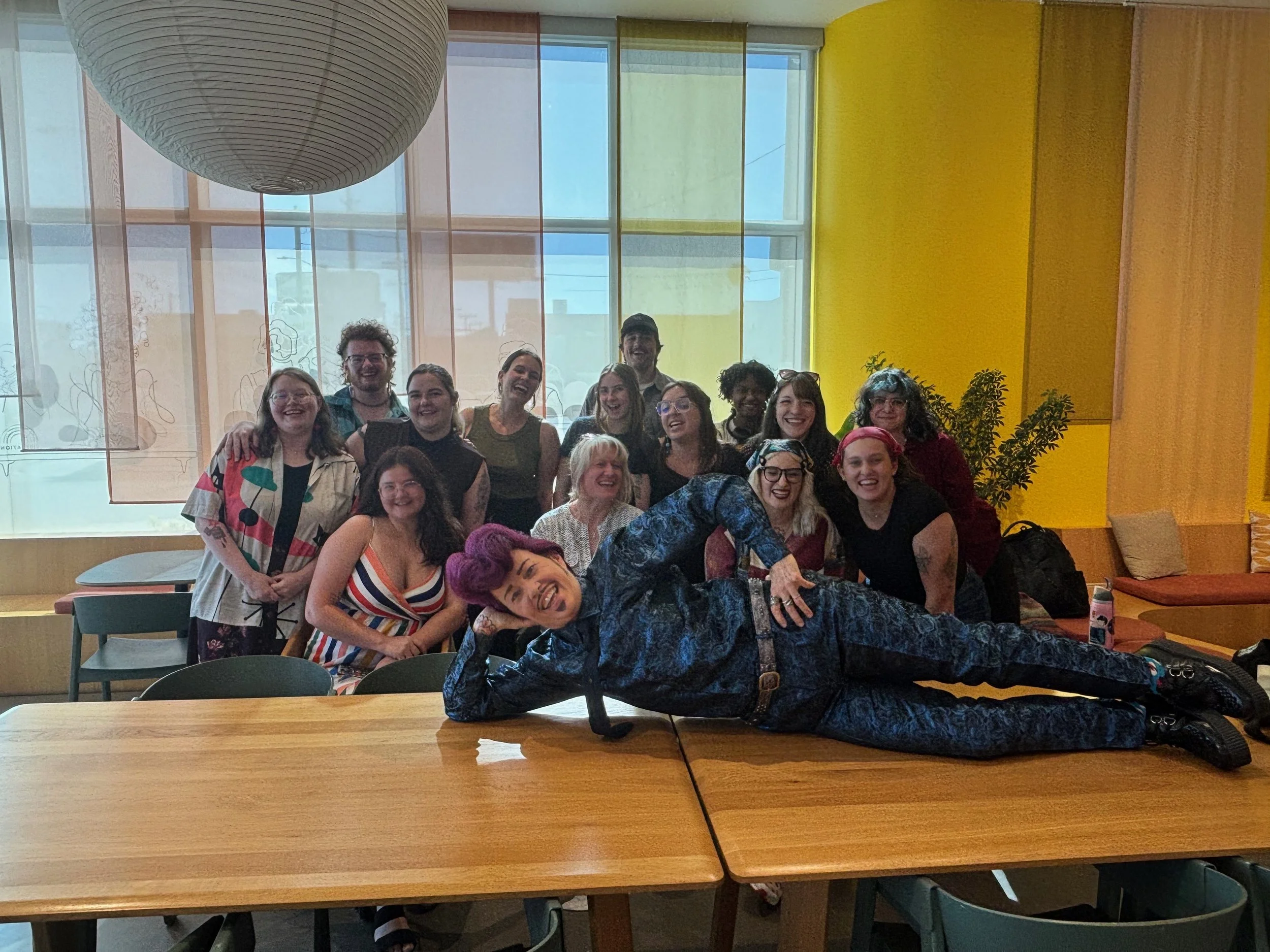
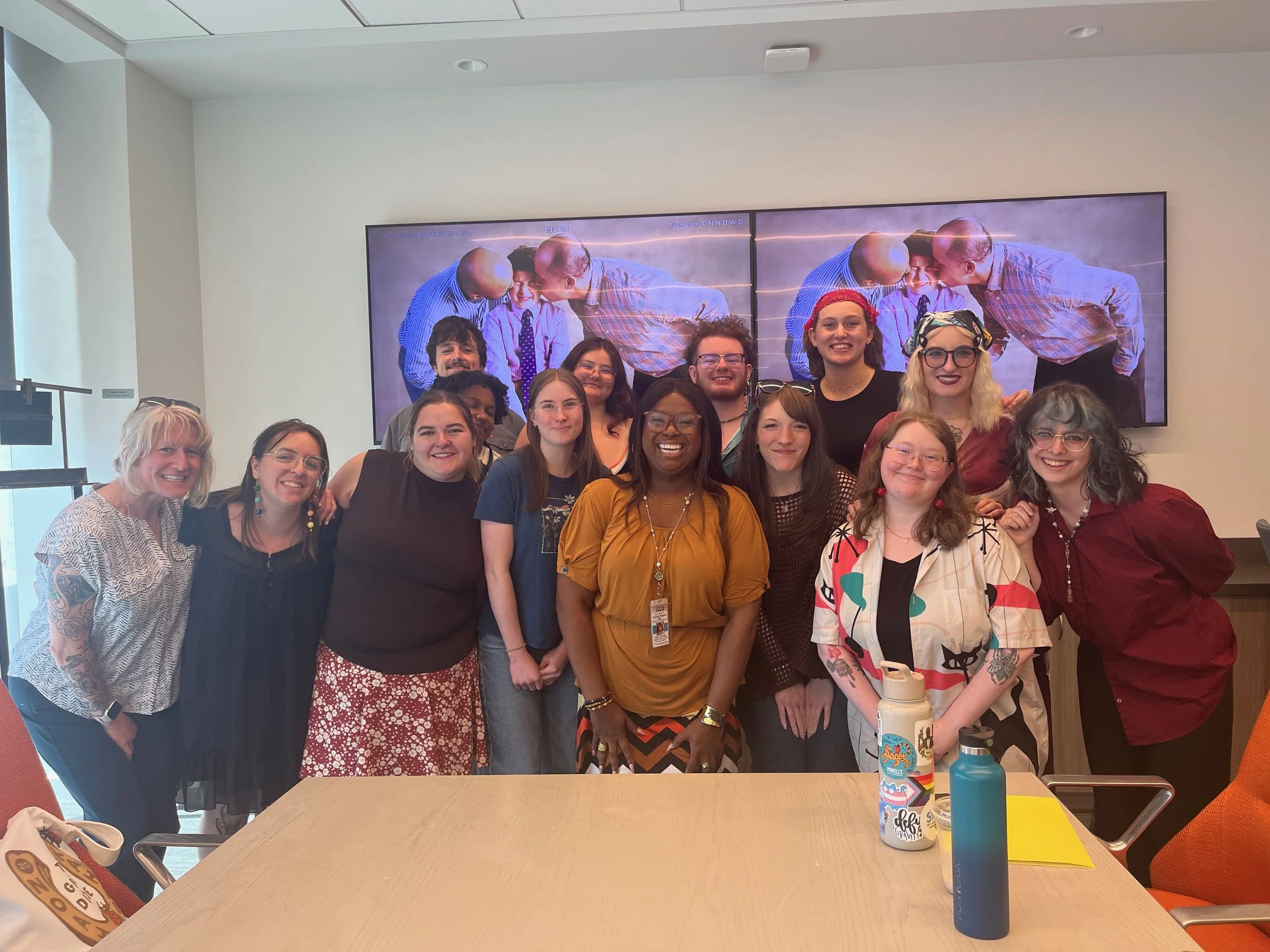
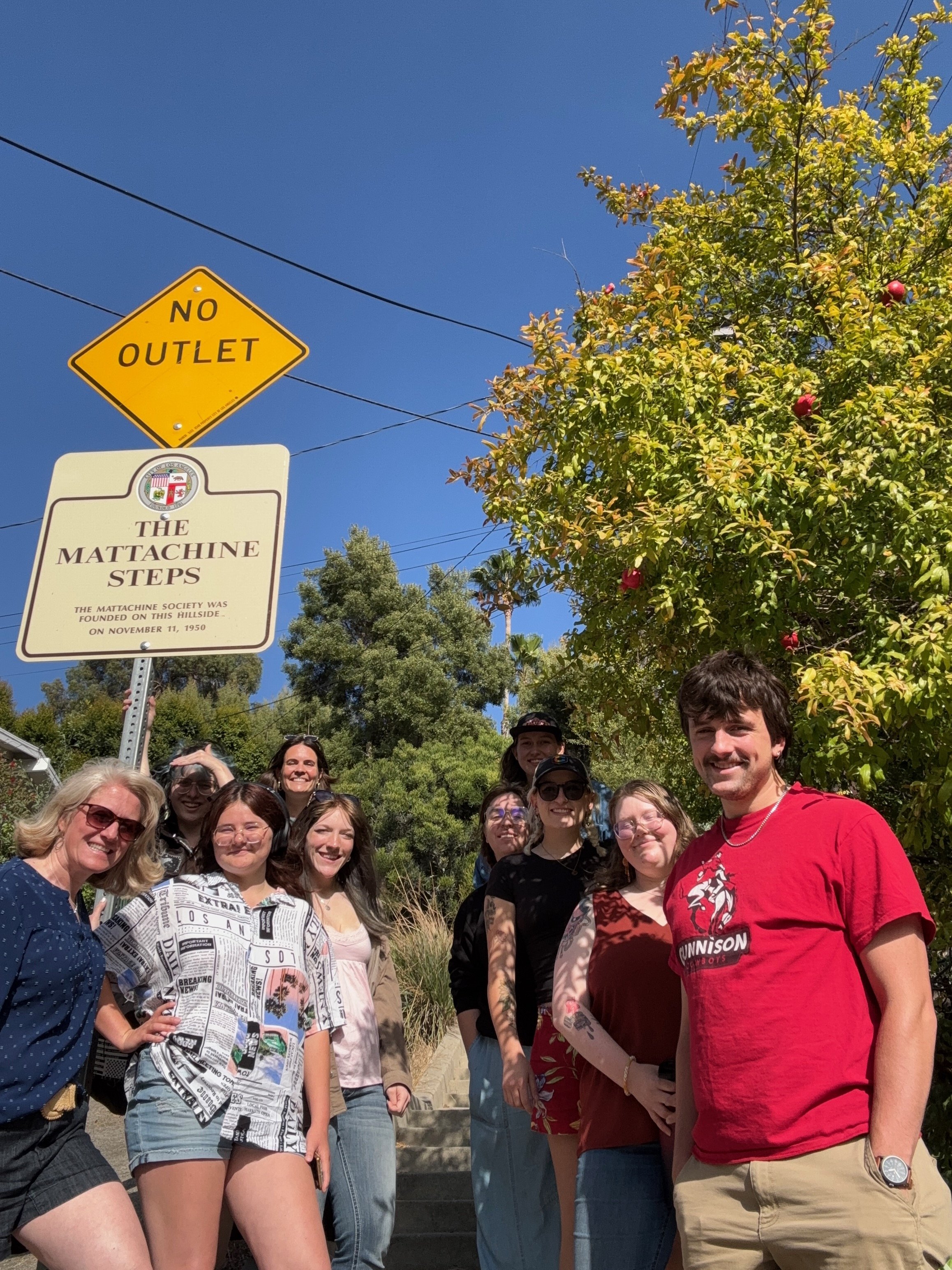
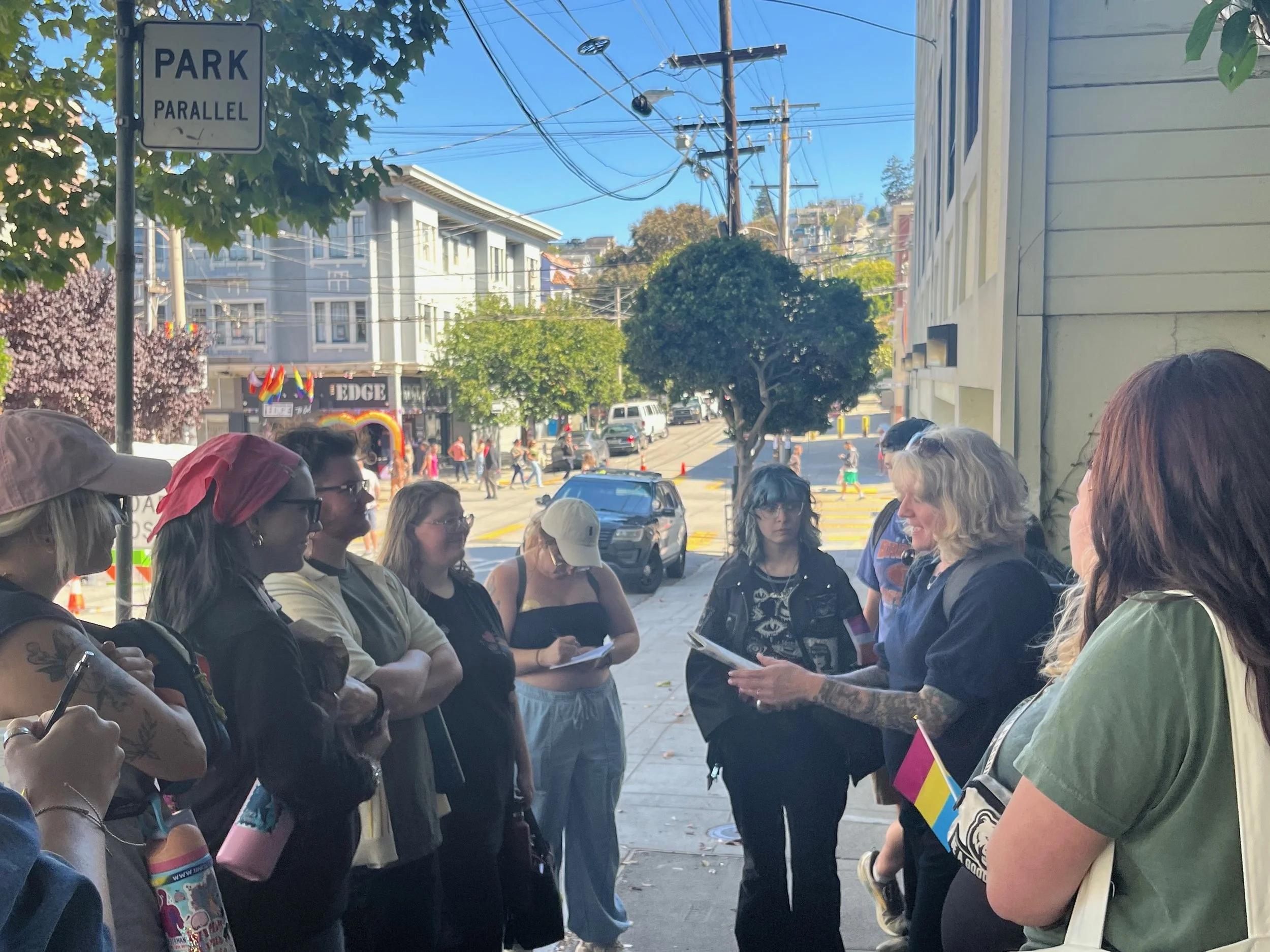
Every day was built to put students in the places history happened, and every stop had a purpose behind it. Our faculty partner set the context before each site, on the bus ride over or at the door, so students arrived knowing what they were walking into. After the heaviest days, we made space to process together, with evening reflections back at the dorms.
In San Francisco, students walked North Beach with a local historian, traced the Castro's landmarks, and spent an afternoon at the GLBT Historical Society Museum. They took part in San Francisco Pride. At the National AIDS Memorial Grove, they sat and walked in reflection, then watched the documentary 5B with a Q&A from Dr. Paul Volberding and Dr. Molly Cook, two of the physicians who helped build UCSF's early AIDS care program. It was the most emotional day of the week, and students kept returning to it in conversation for the rest of the program.
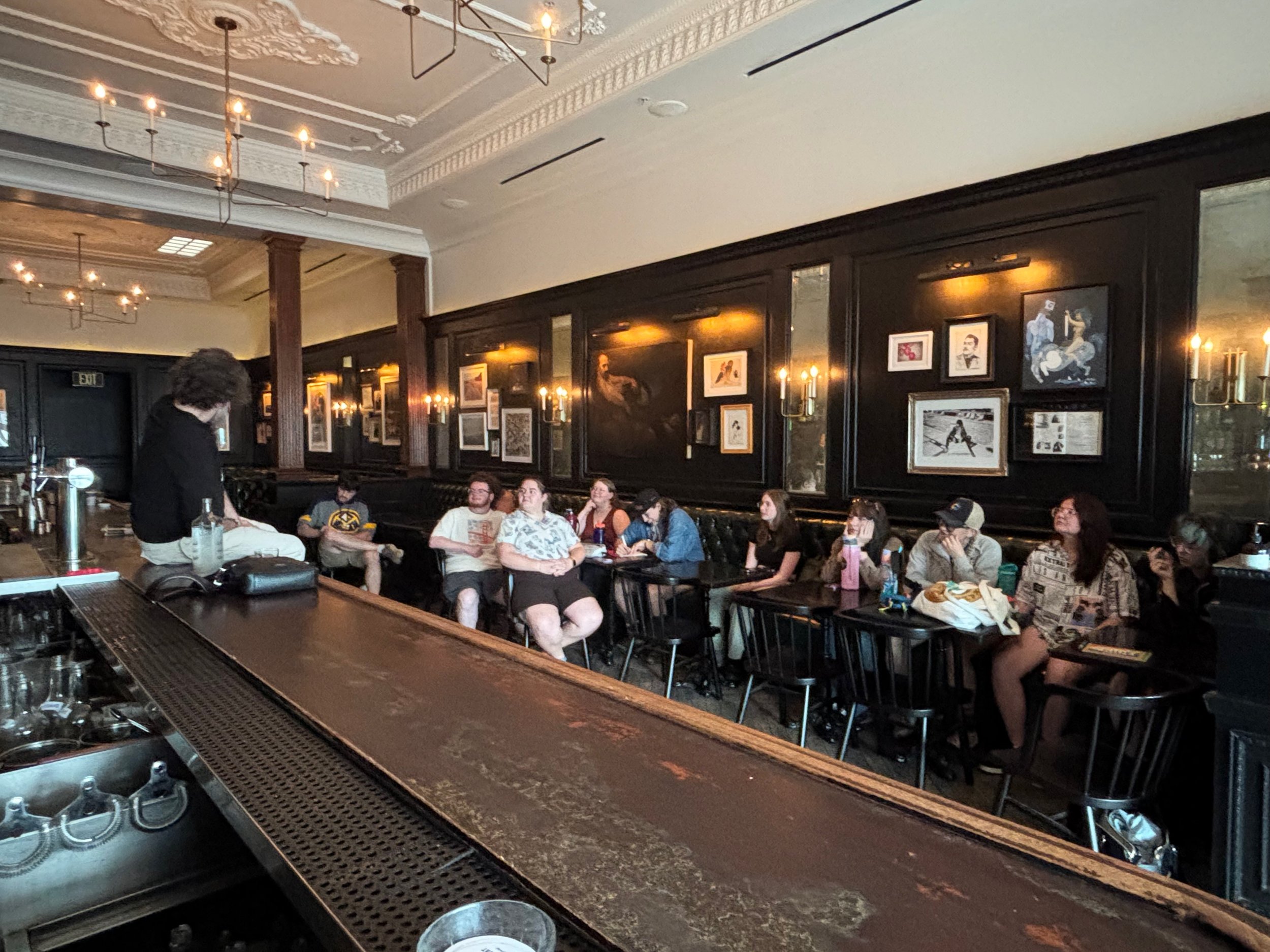
In Los Angeles, they did hands-on research at ONE Archives at USC, working with primary sources most students don't get to touch until graduate school. They had lunch at the Black Cat Tavern with historian Daniel Henning, in the very building where a 1966 police raid led to one of the earliest LGBTQ civil rights protests in the country. They met Sydney Rogers at the LA LGBT Center's Trans Wellness Center, learned the history of drag kings from performer Mo B. Dick, and closed the week with a reflection brunch on the beach in Santa Monica.
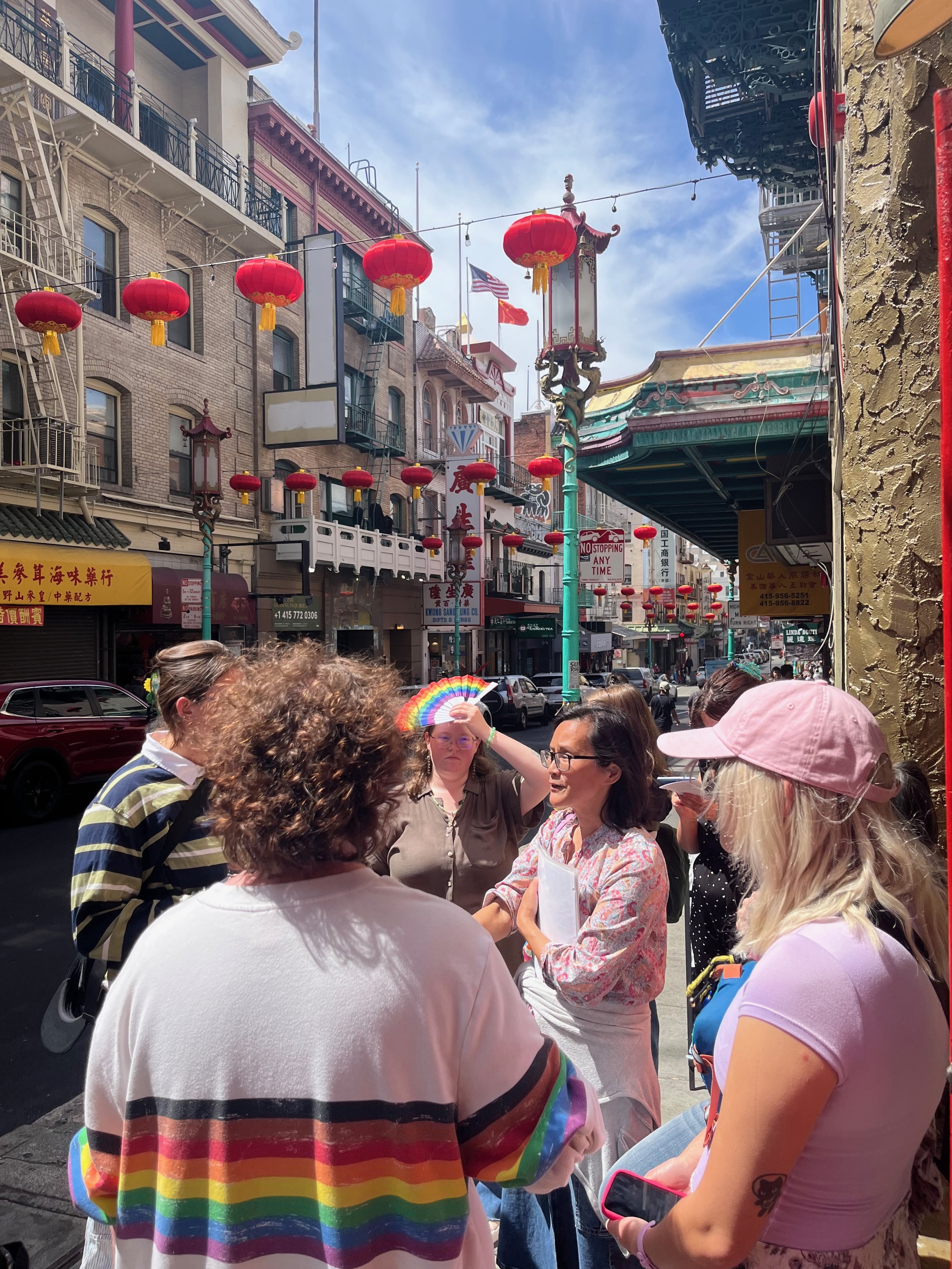
We paid close attention to the shape of the week, too. Heavy history was balanced with joy, long days with time to rest. And we built parts of the itinerary around the students themselves: when one student asked to see San Francisco’s famous Chinatown in pre-departure orientation, we added a walking tour to learn about LGBTQ+ histories in Chinatown; and when another student mentioned they loved art in their registration forms, we arranged a docent-led tour of LGBTQ+ artists at The Broad.
What our students said
Every student completed the exit survey, and every one rated the week a 10 out of 10. The open-ended answers told us more than the scores did. What came up most was belonging:
"It's possibly the safest I've ever felt as a Queer person." (Ayla, sophomore, journalism)
"There was never a moment when I didn't feel like I belonged or I couldn't be myself. My group instantly clicked and became a sort of family within just a few days." (Eli, senior, psychology)
"This trip provided both queer education and community, both of those are so important to someone from areas where neither are provided." (Paige, sophomore, history education)
They also wrote about their own history starting to feel like theirs:
"Learning where I came from and what it took for me to be so freely who I am. Hope and gratitude." (anonymous student survey response)
"Standing physically in spaces where queer history happened was monumental." (Madeleine, junior, English literature)
Many of them left already thinking about what comes next, for themselves and for the students who follow. Carter, who is training to become a history teacher, wrote that the week reshaped how they think about their own classroom: "there is just as much of an importance to spread the history of places and people outside of those institutions." Others asked how they could stay involved, and whether there might be an alumni community to keep the connections going and support future Rainbow Routes students.
What our faculty partner said
Kelly Langley Cook, UNC's Director of Social Studies Education, led the academic side of the program. "I expected to have a 'nice time' touring historical sites with a group of college kids," she wrote afterward. "What I got instead was truly formative for me as a teacher and, I know, for my students."
What struck her most was how much real scholarship the week asked of students. At ONE Archives, they worked hands-on with primary sources, in what she called "an activity usually reserved for PhD-level students." She watched them handle each piece of evidence with care. "I can't remember seeing a group of young people so absolutely engaged with learning," she wrote. "In a world of AI slop, it is powerful for students to experience scholarship in such a tactile manner."
"I expected it to be interesting for me as the professor," she wrote. "I did not expect it to be life changing." In her words, the program connected "a (now) lifelong group of friends to each other and to real, transformative learning," and she is already planning to bring another cohort back.
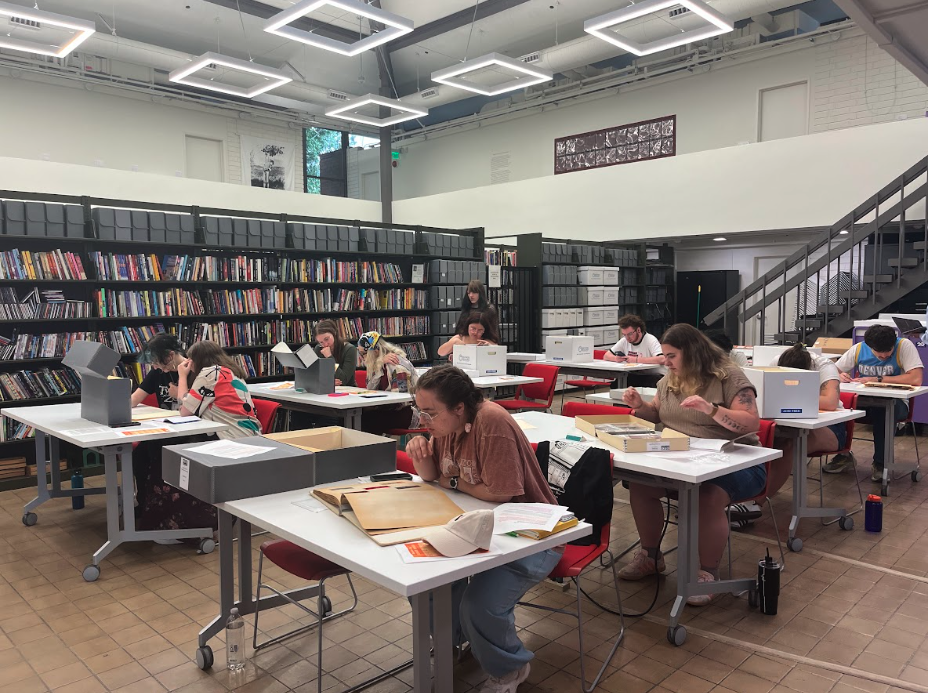
Students at work in ONE Archives at USC, handling primary source materials with the collection stacks rising behind them. To guide their research, we built a bingo card that sent them hunting for specific kinds of documents and artifacts in the boxes they were given.
A community that showed up
Some of the most memorable moments came from the people who hosted us. Guest speakers and community partners went out of their way to welcome the group, several giving more time than we had asked for, a few putting together small gifts for the students. Daniel Henning, who led the lecture at the Black Cat Tavern, and Mo B. Dick, who taught the history of drag kings, each told us this was the best group they had ever presented to, and both of them do this often.
We come to these communities to learn from them, but we want the relationship to run in both directions: to show up for the local queer organizations and people who open their doors to our students, to support them and their work as well.
Thank you
For a lot of LGBTQ students, cost is the barrier, alongside the quiet assumption that travel like this isn't really meant for them. Nine of the twelve students told us they could not have attended without financial support. The other three said it would have been a significant stretch. Not one said funding made no difference.
That support brought the true cost of the program, $2,439.54 per student, down to a flat $700, which covered everything on the ground: lodging, meals, transportation, and every site entry and speaker fee. Grant funding and donors covered the rest. None of it happens without them. Twelve students got to study their own history this summer, in the places it happened, because of that support.
What’s next
That is our proof of concept, and we’re so proud that it worked. We set out to learn whether a program built around queer history and community could give LGBTQ students something they rarely get, and it did. Now we want to reach many more of them.
We're not ready to announce our next program yet, but there will be many. If you want to follow along, or to help us grow it, follow Rainbow Routes or subscribe to The Route, our monthly(ish) newsletter.
